Primal Conquest: Dino Era
- 3.4
- Rating
- 1.00M
- Installs
- Free
- Price

 Analysis by App-foxy
I approached Primal Conquest: Dino Era as a strategy game first, not as a quick dinosaur-themed distraction. Its central appeal is clear: you are asked to survive in a prehistoric setting, build toward strength, and make decisions that gradually turn a vulnerable settlement into something capable of fighting back. That gives the game a more deliberate rhythm than a simple arcade title, and it is best enjoyed when you are willing to check your plans, adjust priorities, and accept that progress is not always immediate.
The game is free to start and comes from 37GAMES. It sits in the strategy category, carries an Everyone 10+ age rating, and has passed the one-million-install mark. Those details tell me that it is aimed at a broad mobile audience, but not necessarily at people who want a completely effortless experience. The strategy layer matters here: your enjoyment depends less on tapping quickly and more on whether you like managing development, preparing for threats, and deciding where limited attention should go.
My overall impression is mixed in a useful way. The prehistoric theme gives the game a recognizable identity, while the free entry makes it easy to test without committing money. However, the average rating of 3.4 from roughly six thousand ratings suggests that the experience will not satisfy everyone. I can understand that reaction. Games built around long-term progression often feel rewarding when you have a clear plan, but slow or demanding when you simply want a short, self-contained session.
You May Also Like

 Blood Strike: 2.5 Anniversary
Blood Strike’s Loadouts Turn Every Drop Into a Tactical Gamble
A close look at Blood Strike’s custom loadouts: how fast access to signature weapons reshapes its battle royale rhythm, rewards preparation, and narrows the gap between fights.

 Pandora - Music & Podcasts
Pandora’s Music Is Easy to Start, but Harder to Recover
Pandora’s strength is its low-effort path from a seed to a station. Its weak spot is how much confidence it asks you to place in connection, setup, and quiet recovery.

 8 Ball Pool
 Is Built on Rivalries, Rematches, and Routine
A close look at the rivalries, rematches, shared routines, and unanswered safety questions that turn a quick pool match into a persistent mobile community.

 Samsung Music
’s Quiet Strength Is Playing What You Already Own
Its reach comes less from spectacle than from dependable access to a personal library. That simplicity is both the app’s strongest retention engine and its ceiling.

 AccuWeather: Weather Radar
AccuWeather Review: A Quick, Clear Forecast for Everyday Decisions
For everyday plans, the best forecast is the one you can understand quickly. AccuWeather makes rain timing, radar, and local conditions easy to act on, with a few trade-offs.

 Hill Climb Racing
Why Hill Climb Racing Still Turns Crashes Into One More Run
A tiny car, a bumpy hill and one more upgrade: Hill Climb Racing keeps resurfacing because its simple chaos makes every near-miss feel personal.
More From Our News Desk
View All News


How the game feels during ordinary play
The first thing I would tell a new player is not to judge the game by its opening minutes alone. Strategy games of this type establish several priorities at once, and the early choices can feel more like orientation than action. I found it more useful to treat the beginning as a planning phase: learn what the game wants me to improve, notice which tasks compete for attention, and avoid spending resources impulsively just because an upgrade is immediately available.
That approach also gives a better sense of perceived speed. The game can feel brisk when I am moving between objectives and making several decisions in a short session. It feels slower when progress is tied to waiting, repeated development steps, or a stronger force that must be prepared before the next challenge becomes comfortable. That slower pace is not automatically a flaw, but it means the game suits patient planners more than players looking for constant action.
A realistic everyday use case is a short evening check-in. I might open the game after work, review what has finished, collect what is ready, choose one meaningful improvement, and then leave. That kind of session can feel satisfying because it turns a few minutes into visible progress. On a quieter weekend, I can spend longer comparing options and preparing for the next obstacle. The important distinction is that the game works better when I play with an intention rather than tapping through every available prompt.
The most useful habit is to decide what your next bottleneck is before spending anything. If development is being held back by one requirement, improving unrelated areas may create the impression of activity without solving the real problem. I found that looking one step ahead made the progression feel less wasteful and reduced the temptation to use paid items simply to escape a poorly planned choice.
Where the strategy becomes interesting
Its strongest moments come from trade-offs. A settlement or force that looks impressive in one area may still be poorly prepared elsewhere, and improving everything at once is rarely practical. I enjoyed the moments when I had to choose between immediate convenience and a more useful long-term improvement. That is more engaging than a simple upgrade ladder because the decision has a visible opportunity cost.
Another worthwhile technique is to group actions by purpose. Instead of treating every available task as equally urgent, I would separate actions that increase immediate readiness from those that improve future growth. This makes the game easier to read during a busy session. It also helps prevent a common mobile strategy mistake: spending all attention on whatever button is highlighted instead of following a coherent development route.
Players who enjoy optimizing may find small efficiencies by planning around completion timing. If I know I will only have a brief chance to return later, I prefer starting a useful longer process rather than filling the session with minor actions that require constant checking. Conversely, when I have time to play, I can focus on decisions that need more thought. This is not a flashy feature, but it changes how comfortable the game feels in daily use.
The dinosaur setting helps these decisions feel less interchangeable than they might in a conventional kingdom builder. The theme gives the progression a sense of place, and the idea of surviving among prehistoric threats makes preparation feel appropriate. Still, the underlying appeal remains strategic management. If dinosaurs are the only reason you are interested, the game may not hold your attention once the novelty fades; if you already like gradual planning, the setting adds welcome personality.
What happens during heavier sessions
Longer play sessions are where I would pay closer attention to perceived performance. Moving through several screens, checking multiple objectives, and making repeated development decisions naturally creates more work than a single quick interaction. I did not treat the game as a benchmark, and I would not promise identical behavior on every phone. In practical terms, the experience is most comfortable when I keep expectations realistic for a strategy title designed around ongoing progress rather than rapid action.
Heavy use can also mean mental load rather than technical load. A session becomes demanding when several goals compete and I am trying to remember what should happen next. That is why I recommend pausing after a major decision instead of immediately opening every available option. A short review of priorities can prevent wasted moves and makes the game feel more controlled, especially when the interface presents many possible directions.
Resource pressure is another part of the experience. The game includes in-app purchases ranging from $0.99 to $99.99 per item, so free players and paying players may approach progression differently. I would not begin by buying anything. First, I would learn which improvements genuinely solve a recurring problem and which ones merely shorten a wait or provide temporary comfort. That distinction matters because a purchase can make one session smoother without improving the player’s overall strategy.
My advice is to set a personal spending boundary before becoming invested. The free starting point makes experimentation easy, but long-term games can encourage small purchases that feel harmless individually. A clear limit protects the experience from turning into a series of automatic decisions. If the game feels enjoyable only when progress is accelerated through purchases, that is a sign to reconsider whether this particular strategy format is right for you.
There is also a practical recovery routine for interrupted play. When returning after a break, I would not immediately spend accumulated resources or begin the first upgrade I see. I would review the current objective, check whether the previous plan still makes sense, and then choose one priority. This simple reset is especially valuable after a busy day, when it is easy to make a poor decision because I have forgotten why I started a particular development path.
Stability and the cost of interruption
Reliability matters more in a progression-focused game than in a title that can be restarted without consequence. If a session ends unexpectedly, the frustration comes not only from losing a few minutes but from losing the rhythm of a carefully arranged plan. I therefore prefer using the game in moments when I have a reasonably stable connection and enough time to finish a decision cleanly, rather than opening it during a rushed commute or while switching repeatedly between demanding apps.
I would also keep the game updated. The current version is 8.0.120, and staying on the current release is the sensible way to avoid problems caused by an older installation. That does not guarantee perfect behavior on every device, but it gives the game the fairest chance to run as intended. If the app feels less responsive after extended use, closing other demanding apps and reopening the game is a more sensible first step than assuming the strategy systems themselves are at fault.
Recovery after a pause is reasonably important to the way I play. I like games that let me return, understand my position, and continue without needing to reconstruct an entire plan from memory. Here, I would make my own small routine: identify the active objective, note the resource that is limiting progress, and ignore distractions until that issue is addressed. This turns returning from a break into a manageable process instead of another source of friction.
That routine also answers a question many new players have: can this work for someone who cannot play continuously? I think it can, provided you are comfortable with a check-in style of play. It is less suitable if you need every session to deliver a complete story or a decisive result. The game’s structure rewards continuity, so irregular players may still enjoy it, but they should expect their progress to feel less smooth than it would for someone who returns consistently.
Device limits and who should install it
The minimum operating-system requirement is Android 7.0, which keeps the technical entry point fairly accessible for Android users with older supported devices. That does not tell me how every phone will perform, because hardware, available storage, background activity, and system condition all affect the experience. I would be especially cautious on a device that already struggles with larger games or has very little free space. Strategy games may not demand constant reflexes, but their menus, progression screens, and ongoing activity still need a phone that is in reasonable shape.
Before installing, I would close unnecessary background apps, update the operating system when practical, and make sure the phone has breathing room. Those are ordinary steps, but they matter more during longer sessions than during a quick test. If the game opens smoothly but becomes uncomfortable after extended use, shorter sessions may be a better compromise than abandoning it immediately. A device that is ideal for lightweight puzzle games is not automatically ideal for a persistent strategy title.
Battery-conscious players should approach it as a game to sample rather than leave open all day. I prefer opening it for a defined task, completing that task, and exiting. This also improves my attention: I am less likely to drift into unnecessary spending or aimless menu browsing. Players with newer phones will probably have more flexibility, while those on modest hardware should judge the game after a longer practical session rather than only after the initial launch.
Compared with a traditional turn-based strategy game, this is a different commitment. A turn-based alternative usually gives me a clearer beginning and end to each decision, while this game is built around continuing development and returning over time. Compared with a fast competitive strategy game, it is less about immediate reactions and more about preparation. That makes it a better fit for someone who wants a persistent prehistoric project, but a weaker choice for anyone seeking compact matches or a purely offline-feeling campaign.
I would recommend it to players who enjoy gradual growth, resource choices, and checking a developing settlement or force over multiple sessions. It is also a reasonable option for dinosaur fans who want more than a visual theme and are willing to engage with planning. I would skip it if you dislike waiting, dislike recurring progression loops, or want a game that can be fully understood and completed in one sitting. I would also be cautious if you are uncomfortable with optional purchases that reach from small amounts to much larger ones.
My performance verdict
After weighing the pacing, heavier-use demands, recovery habits, and device considerations, I see Primal Conquest: Dino Era as a game that rewards controlled engagement. Its perceived speed is acceptable when I focus on a clear objective, but it can feel slow when I expect constant action. Its strongest quality is the way the prehistoric theme gives ordinary strategic decisions a distinct identity. Its main weakness is that the ongoing structure may feel repetitive or demanding to players who prefer immediate rewards.
The game is free, so trying it is straightforward, and its Everyone 10+ rating makes its intended audience broad. The one-million-plus install count shows that it has reached a substantial mobile audience, while the 3.4 average from around six thousand ratings is a useful reminder to keep expectations balanced. I would not call it a universal recommendation. I would call it a worthwhile trial for the specific player who enjoys making a plan, returning to it, and accepting that progress is built in stages.
My final recommendation is to play patiently for the first few sessions, avoid rushing into purchases, and judge the game by whether its routine fits your day. Use short visits for collecting and prioritizing, reserve longer sessions for meaningful planning, and give your device a fair chance by closing unnecessary apps. If that rhythm feels satisfying, the game can become a pleasant long-term strategy habit. If it feels like work before the prehistoric setting has a chance to matter, a shorter, more self-contained strategy game will probably serve you better.
In my experience, the best reason to keep playing is not simply the promise to conquer, but the small satisfaction of seeing a thoughtful decision pay off later. That feeling will not appeal to everyone, yet it is exactly where this game finds its character. Choose it for deliberate progression and prehistoric atmosphere, not for instant action.
FAQs for Primal Conquest: Dino Era
01What is Primal Conquest: Dino Era about?
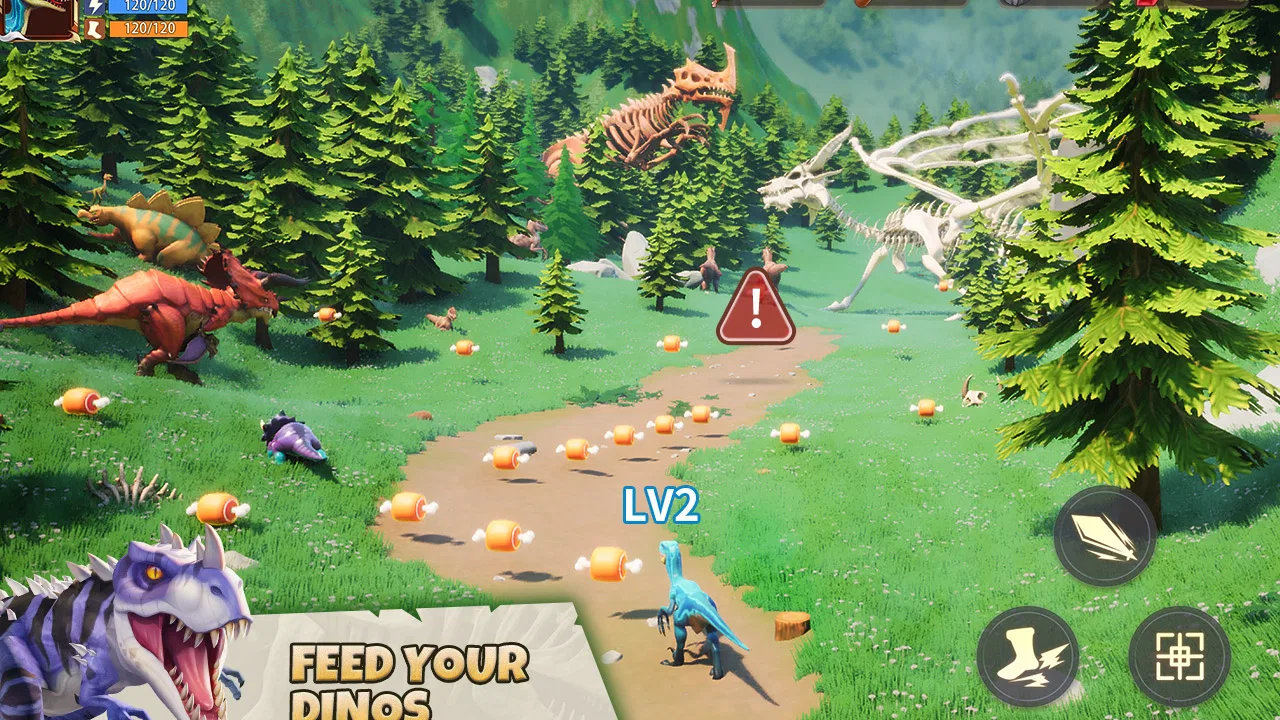
Primal Conquest: Dino Era is a dinosaur-themed strategy and base-building game for mobile devices. You develop a prehistoric settlement, collect resources, research technologies, recruit or hatch dinosaurs, and build an army to defend your territory. The game combines city management, troop upgrades, exploration, and battles against other players or computer-controlled enemies.
02Is Primal Conquest: Dino Era free to download and play?
The game is generally available as a free download, but it may include optional in-app purchases. These purchases can provide resources, speed up construction or research, unlock bundles, or offer additional progression benefits. You can usually play without paying, although advancement may take longer and some competitive features may feel more demanding for players who do not spend money.
03Does Primal Conquest: Dino Era require an internet connection?
Yes, an active internet connection is normally required because Primal Conquest: Dino Era includes online progression, account synchronization, events, multiplayer interactions, and server-based battles. A stable Wi-Fi or mobile-data connection is recommended, especially during combat or alliance activities. Offline play is not expected to provide the complete game experience, and progress may not update correctly without a connection.
04Can I play Primal Conquest: Dino Era casually, or does it require frequent attention?
You can play casually by collecting resources, upgrading buildings, completing missions, and checking your settlement periodically. However, players who want to compete seriously may need to log in more often for timed events, alliance activities, upgrades, and defensive management. Construction timers and daily rewards support short sessions, while multiplayer competition can require more consistent involvement.
05Is Primal Conquest: Dino Era suitable for children?
The game may be suitable for older children and teenagers who enjoy strategy, dinosaurs, and fantasy battles, but parents should review its age rating and store information before installation. It can include combat imagery, online interaction, advertisements, and optional purchases. Because spending and communication features may be present, parental controls and purchase restrictions are advisable for younger players.
Pros
- Engaging dinosaur-collection and base-building gameplay
- Large variety of prehistoric creatures to discover and upgrade
- Strategic battles reward thoughtful team composition
- Regular events provide extra objectives and rewards
- Colorful visuals make the prehistoric world enjoyable to explore
Cons
- Progress can become heavily dependent on resource grinding
- In-app purchases may speed up upgrades and progression
- Combat may feel repetitive after extended play sessions
- Requires a stable internet connection for most features
- Numerous systems and menus can feel overwhelming for new players

Primal Conquest: Dino Era
Gallery